
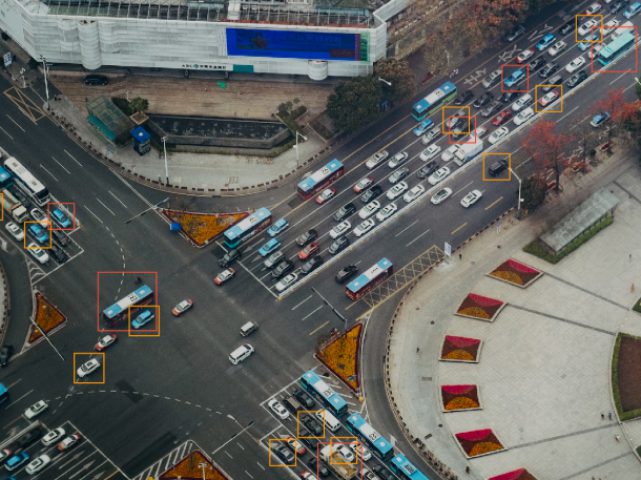
Medical annotation serves as a cornerstone in a multitude of critical healthcare applications, encompassing radiology, pathology, telemedicine, and medical research. It plays a pivotal role in facilitating accurate disease detection, precise organ and tissue segmentation, anomaly identification, and evaluation of treatment efficacy. By providing accurate annotated data, medical annotation empowers AI models to detect abnormalities, track disease progression, and enable evidence-based medical decision-making.
Lesion Detection
Our annotators demonstrate unparalleled proficiency in the accurate detection and precise localization of lesions within medical images and scans. By accurately annotating abnormalities such as tumors, cysts, or lesions, we enable early diagnosis, facilitate comprehensive treatment planning, and ensure effective monitoring of disease progression.
Organ Segmentation
We offer precise organ annotations, delineating the boundaries of organs and tissues in medical images. This invaluable annotation technique enables accurate volumetric measurements, facilitates intricate surgical planning, and enhances the precision of radiation therapy targeting. By leveraging our expertise in organ segmentation, healthcare professionals gain invaluable insights for improved treatment outcomes and patient care.
Landmark Annotation
Landmark annotation is a specialized technique that encompasses the precise identification and marking of anatomical landmarks or points of interest within medical images. This annotation process plays a crucial role in accurate alignment, tracking, and analysis of anatomical structures, making it invaluable in various healthcare applications. From facial analysis and orthopedics to dental imaging, landmark annotation enables advanced diagnostics, treatment planning, and research.
Semantic Segmentation
Assigning meaningful labels to each pixel, semantic segmentation enables precise organ, tissue, and lesion segmentation in medical data. Our expertise empowers accurate image analysis, surgical planning, and automated disease detection, enhancing diagnostics and advancing medical technology.
Polygon
Annotation
Annotating Polygons is a precise way to annotate objects by including only the pixels that belong to them. Polygons are most useful for training object localization & detection algorithms. They are used in annotations to medical image data & in natural data related to scene text.
Polyline &
Spline Annotation
Polyline techniques help create ML models for computer vision to guide autonomous vehicles. Our annotators label the lane using line or spline annotation techniques. This makes the ADAS system on self-driving cars easily recognize the roads, ensuring safe driving.
FSL & Semantic
/ Annotation
With pixel-by-pixel annotation, semantic segmentation assists the AI-based perception model in classifying & detecting the objects of interest. To create the segments that your computer vision algorithm needs, our team annotates each and every pixel of an image.
Image
Categorization
By using precisely categorized photos & image classification procedures that ensures accuracy while removing any human bias or errors, we supply your computer vision models with reliable ground truth data. Our employees are multilingual experts.
Pose
Estimation
Used in a series of images, this technique detects & tracks facial features, expressions, emotions, body parts & poses. This is done by looking at a combination of the pose and the orientation of a given person / object.
Data Insights Are Posted Right Here.

The Lakers won the NBA playoffs thrillingly beating the Miami Heat in an NBA season like no other in the history......

Sports Analytics is a collection of relevant historical statistics that when applied in the right way, can provide......

Neville Patel – A Visionary In The Data Annotation Industry. Artificial Intelligence and Machine Learning are revamping the way…